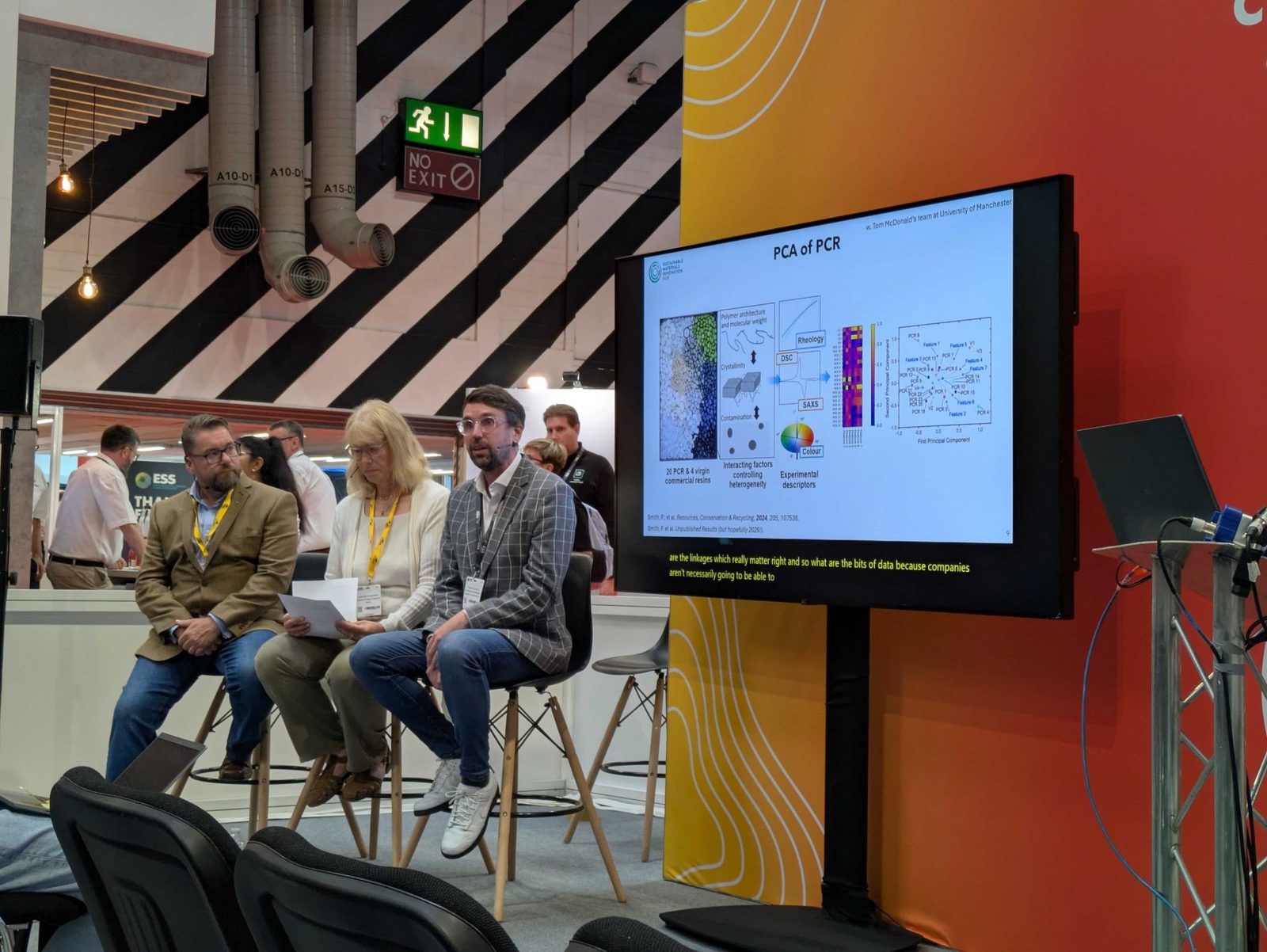
Our CTO, Craig Spencer-Smith FIMMM, was invited to speak at the Resource & Waste Management Expo, sharing the session with Professor Michael Shaver and Caroline Strudwick on the Henry Royce Institute stand.
Two days of conversations across the resource and waste sector, and a good number of them about conveyor belting — which is not usually anybody’s idea of a waste stream. It rarely appears in a waste report. It is bought as equipment, worn out quietly over a couple of years, and skipped without much thought about what went into making it.
The session kept returning to one problem, and it is the reason that happens: the linkages that matter most in a material’s life are usually the ones no single company can see on its own. A manufacturer knows its resin. A processor knows its line. A waste handler knows what arrives on the back of the lorry. Very few can follow one material the whole way through, and without that the choice between repairing and replacing is guesswork dressed up as procurement.
We meet the same gap in belting every week. Every operator knows what a belt costs to buy. Far fewer know what one costs to own — the fitting, the downtime, the disposal, and the replacement two years later. That second number is the one that decides whether repairing is worth doing, and it is almost never on the invoice.
It is also why our technology and methodology went through the Sustainable Materials Innovation Hub at the Henry Royce Institute rather than simply being asserted. When we say a repaired belt beats a replaced one, the figures behind it were checked by people with no stake in the answer. Standing on that stand for two days was a reminder of how much that matters in a room full of people who have heard plenty of claims.